Loading subject…
1. Introduction to Economics
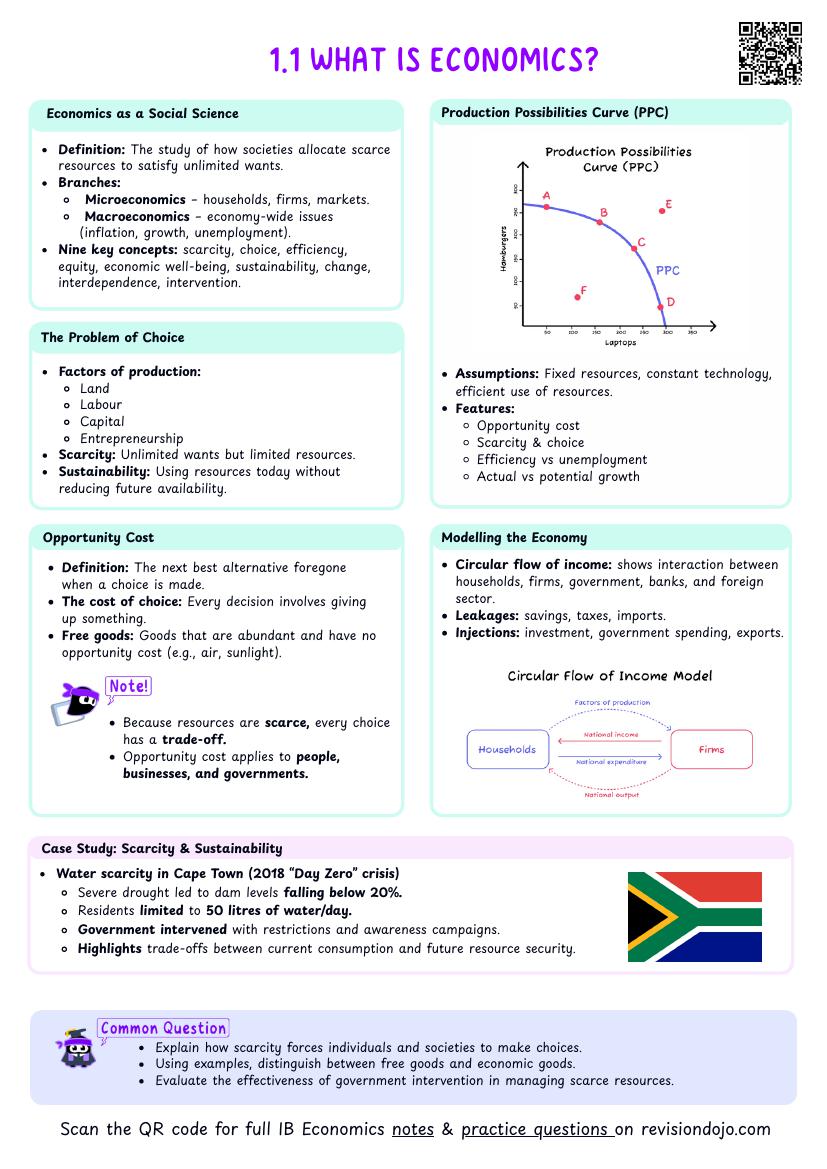
1.1 What Is Economics?
1.2 How Do Economists Approach the World?
2. Microeconomics
2.1 Demand
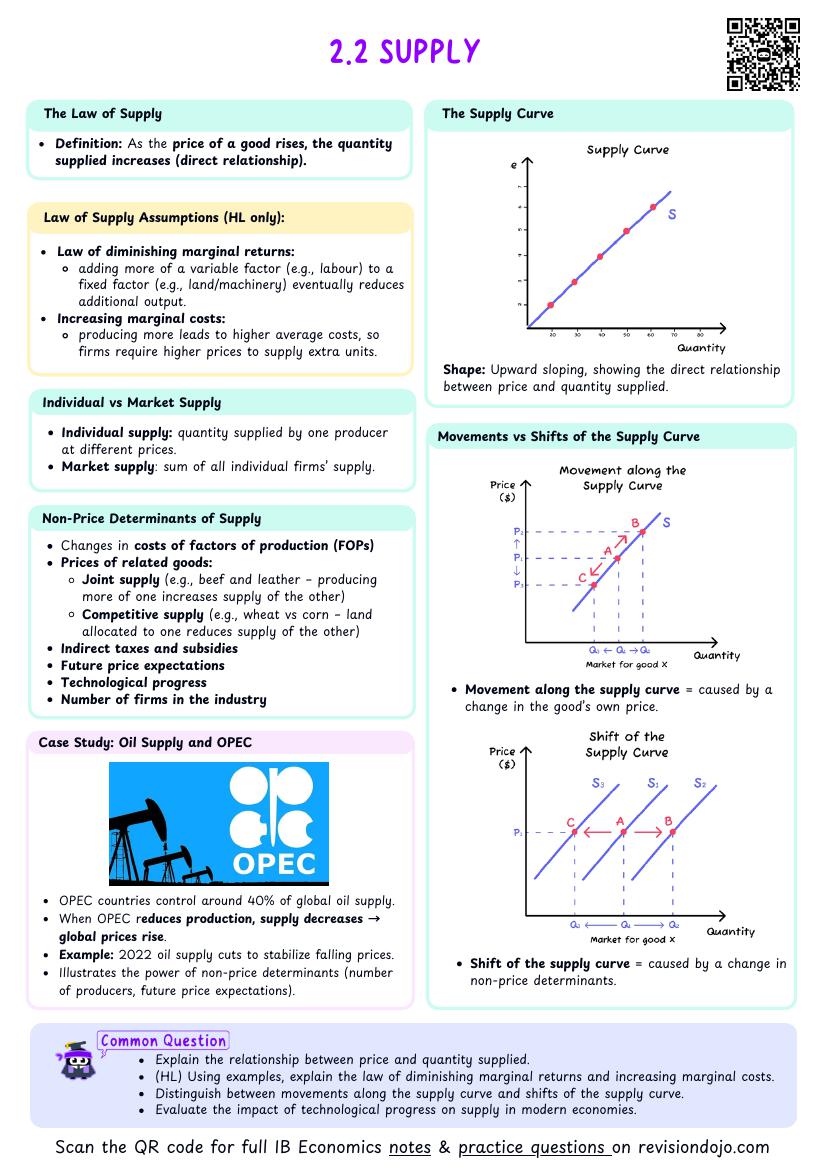
2.2 Supply
2.3 Competitive Market Equilibrium
2.4 Critique of the Maximizing Behaviour of Consumers and Producers (HL Only)
2.5 Elasticities of Demand
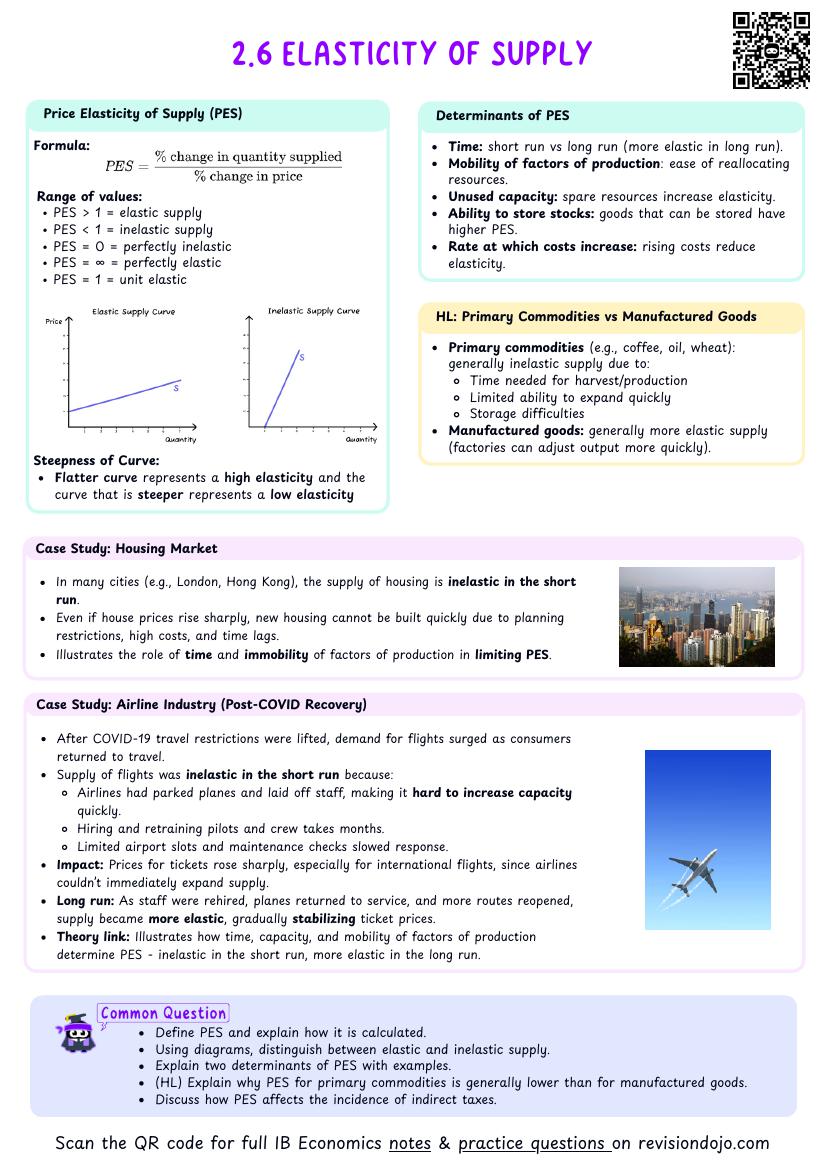
2.6 Elasticity of Supply
2.7 Role of Government in Microeconomics
2.8 Market Failure - Externalities, Common Pool Resources, Public Goods, Asymmetric Information
2.9 Market Failure - Public Goods
2.10 Market Failure - Asymmetric Information (HL Only)
2.11 Market Failure - Market Power (HL Only)
2.12 The Market’s Inability to Achieve Equity (HL Only)
3. Macroeconomics
3.1 Measuring Economic Activities
3.2 Variations in Economic Activity - Aggregate Demand and Aggregate Supply
3.3 Macroeconomic Objectives
3.4 Economics of Inequality and Poverty
3.5 Demand Management - Monetary Policy
3.6 Demand Management - Fiscal Policy
3.7 Supply Side Policies
4. The Global Economy
4.1 Benefits of International Trade
4.2 Types of Trade Protection
4.3 Arguments For and Against Trade Protection
4.4 Economic Integration
4.5 Exchange Rates
4.6 Balance of Payments
4.7 Sustainable Development
4.8 Measuring Development
4.9 Barriers to Economic Growth and Economic Development
4.10 Economic Growth and Economic Development Strategies
Browse summary cheatsheets for
2.1.1 The Law of Demand
7 minute read
2.1.2 Demand Curve
5 minute read
2.1.3 Relationship Between an Individual Consumer’s Demand and Market Demand
2.1.4 Non-Price Determinants of Demand
10 minute read
2.1.5 Movements and Shifts of the Demand Curve