

If you have ever stared at your IB History IA draft and thought, “I know the facts… so why does this still feel weak?” you are in good company. Most students don’t lose marks because they lack knowledge. They lose marks because the IA analysis asks for something rarer: judgement.
In the IA analysis, you stop being a narrator and start being a historian. You weigh evidence, notice bias, compare interpretations, and keep returning to the one question that matters: does this help answer my research question? That is what separates a readable investigation from a high-scoring one.
Quick checklist: what examiners want from your IA analysis
Before the 10 tips, here is the simple benchmark. A strong IA analysis usually does these things consistently:
-
Links every paragraph back to the research question
-
Uses evidence precisely (dates, decisions, quotations, statistics)
-
Evaluates at least two key sources with clear value and limitations
-
Includes multiple perspectives (not just “two sides,” but why they differ)
-
Ends with a conclusion that is a judgement, not a summary
If you want a rubric-aligned way to self-check, the IB History IA rubric grader can help you spot where your IA analysis is drifting.
Tip 1: Write one sentence that your IA analysis must prove
Good analysis begins with a quiet commitment. Before you draft, write a single sentence that your IA analysis is trying to establish.
Example: “Economic constraints mattered more than ideology in shaping X decision between Y and Z.”
That sentence becomes your internal compass. If a paragraph cannot help prove it, you either cut it or move it to background context. This is also why a focused question matters so much; use How to Write a Strong IA Research Question if you still feel your scope is too wide.
Tip 2: Build paragraphs like a historian, not like a storyteller
A reliable IA analysis paragraph often follows a simple rhythm:
-
Claim (your analytical point)
-
Evidence (specific source support)
-
Evaluation (why this evidence is credible/limited)
-
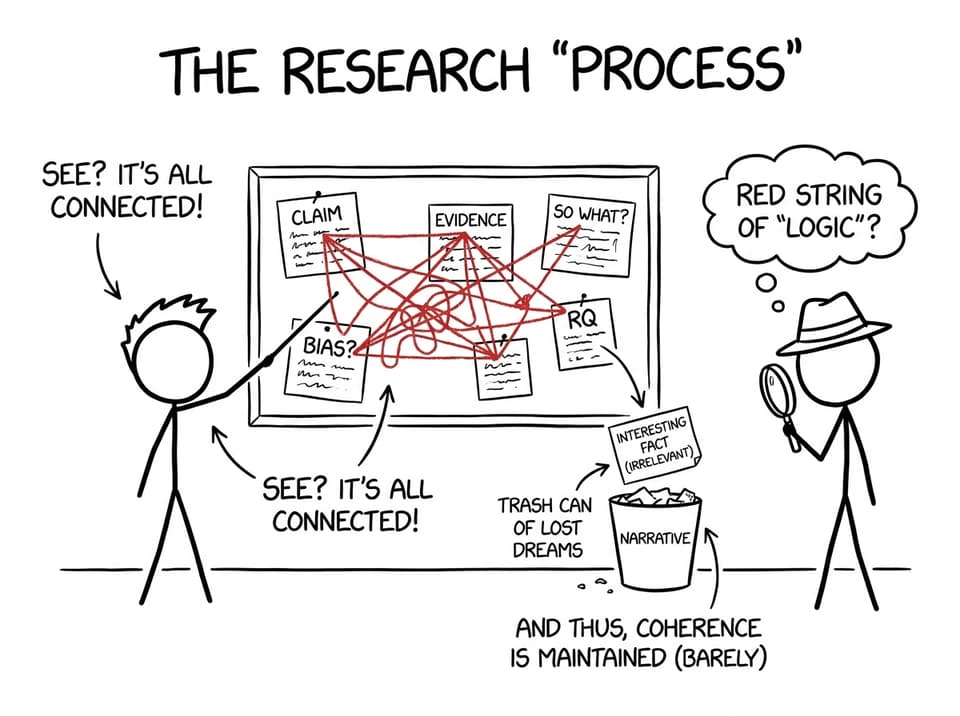
So what? (how it answers the research question)
This prevents the classic drift into narrative. If you want to see what that drift looks like in real student work, scan the patterns in Common IB History IA mistakes.
Tip 3: Use context like salt: enough to reveal flavour, not enough to ruin the dish
Your IA analysis needs context, but only the kind that creates meaning. Offer background only when it helps the reader understand significance.
A good test: if you can delete a context sentence without changing the argument, it probably belongs in a footnote, a shorter phrase, or nowhere at all.
Tip 4: Choose 8-10 credible sources, then actually use them
Most strong IA investigations land around 8-10 credible sources across primary and secondary material. The number matters less than the way you deploy them.
Instead of citing many sources once, return to your best sources repeatedly, each time for a specific analytical job (corroboration, contradiction, perspective, limitation). If you want models, browse IB History IA examples and the wider IB History exemplars library.
Tip 5: Evaluate two key sources deeply, but integrate it into the argument
Your IA analysis should critically evaluate at least two key sources. The classic method (often taught as OPVL) works when you avoid turning it into a checklist.
Instead of writing “The limitation is bias,” write the impact of that limitation:
-
Who created it, and what did they gain by writing it?
-
What did they likely omit or exaggerate?
-
How does the timing change its reliability?
-
What does it reveal that later accounts cannot?
When evaluation is integrated, it reads like thinking, not like compliance.
Tip 6: Make historiography do work, not decoration
One of the fastest ways to upgrade IA analysis is to treat historians like arguments, not ornaments.
Do not just drop a historian quote and move on. Instead:
-
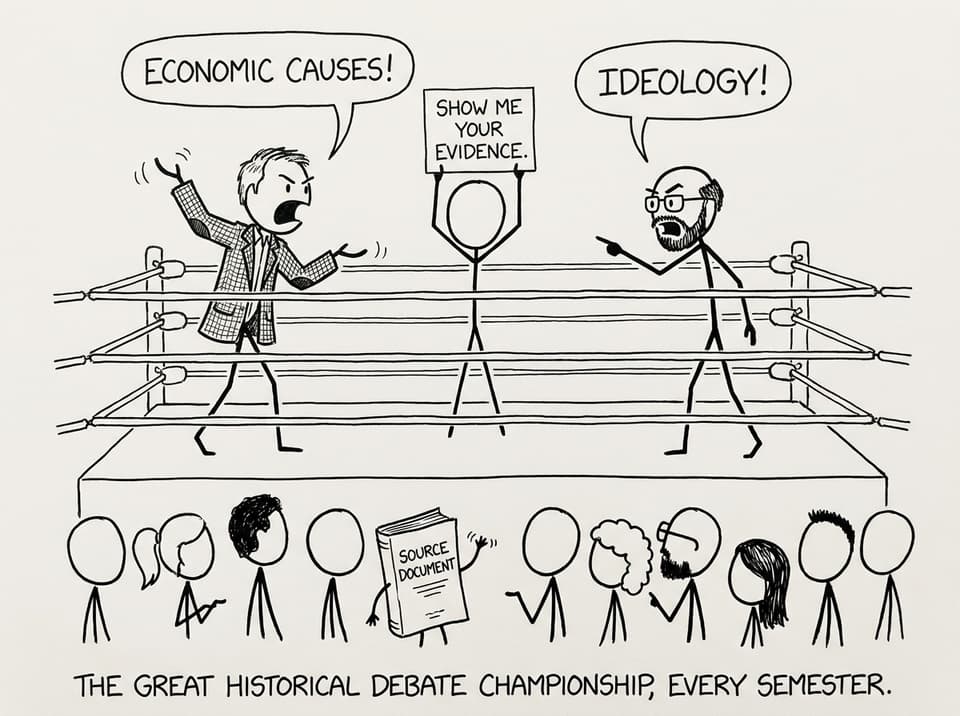
Explain why Historian A emphasizes economics (sources used, ideology, era of writing).
-
Explain why Historian B emphasizes ideology (different archives, different definitions, different assumptions).
-
Decide what your evidence supports, and say so.
This habit also pays off when you revise for papers. If you are balancing coursework with exam prep, Best Study Techniques for IB History HL Students connects the same analysis skills to essays.
Tip 7: Prefer precise evidence over big quotes
In IA analysis, precision beats volume. A short phrase from a speech, a statistic, or a clearly attributed decision can be more powerful than a long quotation.
After every piece of evidence, force yourself to add a line that begins with:
-
“This suggests that…”
-
“This matters because…”
-
“However, this is limited because…”
That single move converts information into analysis.
Tip 8: Choose a structure, then make it obvious
A strong IA analysis is easy to follow. Two structures tend to work best:
-
Thematic: each paragraph is a factor (economic, political, international pressure, leadership).
-
Chronological: each paragraph is a turning point, but with sustained evaluation.
Pick one and commit. Signpost clearly with topic sentences that echo the research question. For broader planning across the whole investigation, How to Write an Outstanding IB History IA is a helpful map.
Tip 9: Audit every paragraph for “research question return rate”
Here is a practical editing move: highlight every time you explicitly connect back to the research question. If you only do it in the introduction and conclusion, your IA analysis will feel like it is wandering.
Try adding a short clause to the end of key sentences:
-
“which supports the argument that…”
-
“therefore strengthening the case that…”
It looks small, but it keeps the reader oriented and makes your reasoning visible.
Tip 10: Conclude with a judgement, not a recap
A strong IA analysis conclusion answers two questions:
-
What interpretation is most convincing based on the evidence you evaluated?
-
What limits your conclusion (source gaps, bias, scope, access)?
A conclusion that admits limits is not weak. It signals historical maturity.
A final note: let RevisionDojo carry the workload you should not
The best IA analysis is not written in one burst of inspiration. It is built through small, disciplined revisions: sharper claims, cleaner evidence, stronger evaluation, clearer judgement. That is also where RevisionDojo fits naturally into your workflow.
Use RevisionDojo’s IB History resources to revise content alongside your IA, the Study Notes to rebuild context quickly, and the Questionbank to stay exam-ready while coursework is still in progress. When you are polishing, the AI Chat can help you test whether your paragraph actually answers the research question, and the Grading tools can show you where your IA analysis is still leaving marks on the table. If you want to see what top structure and evaluation look like, the Coursework Library exemplars are the fastest reference point, and if you are stuck, Tutors can help you break the problem into something manageable.
Your IA analysis is not about proving you know history. It is about proving you can think with it. And that is a skill that will outlast the deadline.