


A hook before you write a word
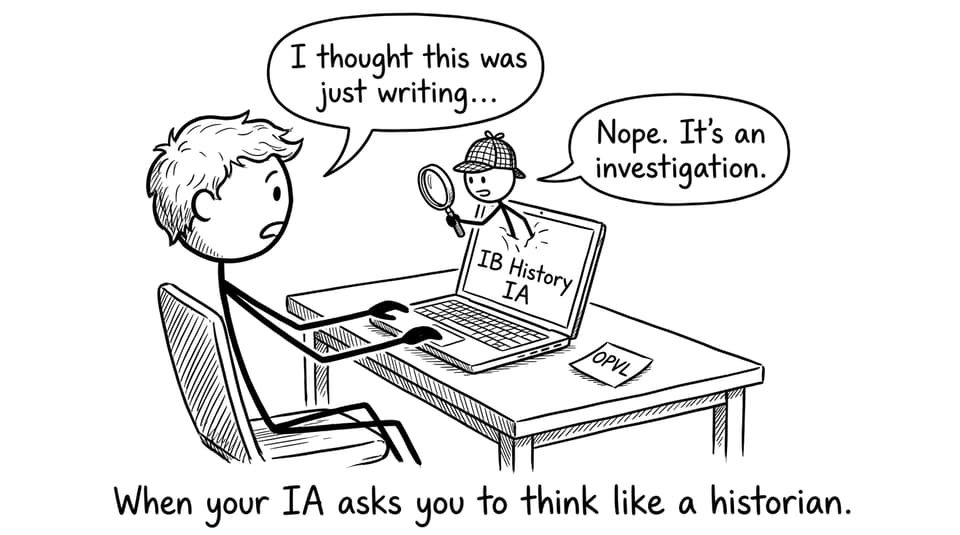
Most IB History students don’t struggle because they “can’t write.” They struggle because the History IA quietly asks you to change identities. One day you’re revising content for Paper 1 and Paper 2. The next, you’re expected to think like a historian: narrow a question, interrogate evidence, and defend a judgement with discipline.
That shift is the whole point of the IB History IA. It’s not a mini-essay. It’s a 2,200-word investigation that rewards focus, source work, and analysis. If you approach it like a timeline with fancy citations, it feels impossible. If you treat it like a structured inquiry, it becomes surprisingly manageable.
Quick checklist for an outstanding IB History IA
Use this as your “pre-flight check” before drafting:
-
A research question that is narrow enough to answer in 2,200 words
-
A mix of primary and secondary sources you can evaluate, not just quote
-
The official three-part structure (Section A, B, C) planned before you write
-
Clear OPVL in Section A (Origin, Purpose, Value, Limitation)
-
Topic sentences that link every paragraph back to the research question
-
A conclusion that makes a judgement (not a summary)
If you want a rubric-aligned self-check, the IB History IA Grader is a fast way to spot which section is drifting.
Choose a research question that fits the size of the assignment
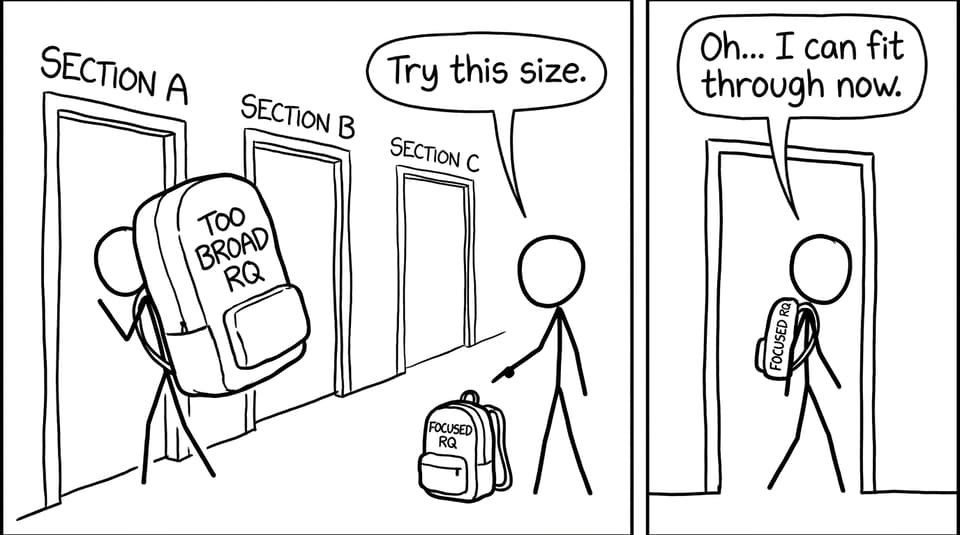
In IB History, most IA problems begin with an oversized question. Broad questions force you into narration because you have no room to evaluate competing explanations.
Instead of “What caused World War II?”, shrink using one lever at a time: time frame, place, actor, policy, or turning point. Examples that tend to work:
-
“To what extent did the Treaty of Versailles contribute to political instability in Germany between 1919 and 1933?”
-
“How significant was propaganda in shaping the US decision to enter World War I?”
If you want more examples and the logic behind them, use How to Choose a Strong IB History IA Question as your question filter.
Gather sources like you’re building a case, not a bibliography
A great IB History IA doesn’t win by having the most sources. It wins by using a few sources with precision.
Aim for balance:
-
Primary sources: speeches, letters, diaries, newspapers, government documents
-
Secondary sources: scholarly books, journal articles, historians’ interpretations
Track citations early (Zotero, Mendeley, or a simple spreadsheet). The hidden time-saver is noting why you’re using each source: context, evidence, or interpretation. That tiny note prevents random quote dumping later.
To see what top-level sourcing and structure looks like in real work, browse IB History Examples in the Coursework Library.
Follow the IB History IA structure (and make it work for you)
The structure is not optional. In IB History, the structure is part of how examiners find marks.
Section A: Identification and evaluation of sources (about 500 words)
Do three things well:
-
State your research question clearly
-
Choose two key sources central to your argument
-
Evaluate each source using OPVL
A strong OPVL isn’t generic. It’s specific: this source is valuable because… and limited because its audience/purpose/context creates a bias or gap that matters for my question.
Section B: Investigation (about 1,300 words)
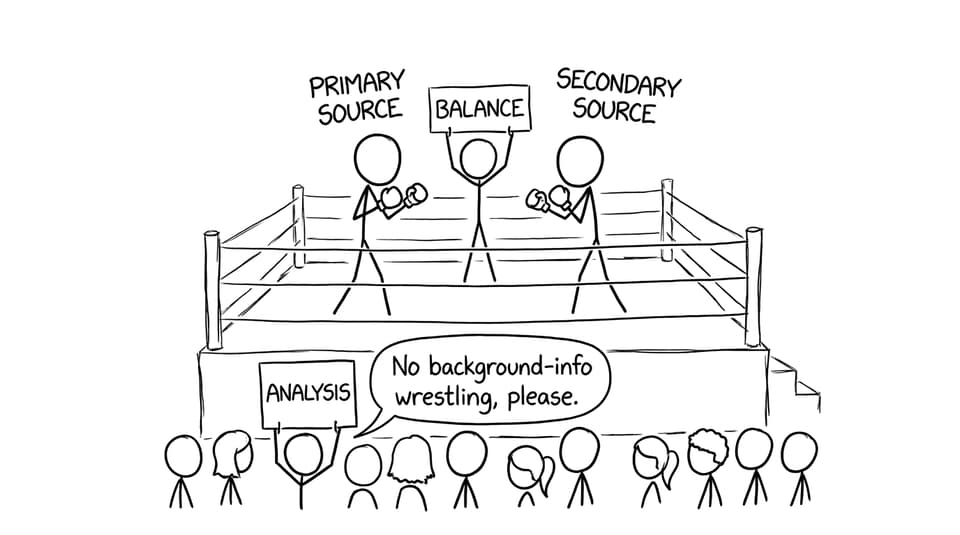
This is where many IB History IAs lose marks because students over-explain background. Your job is to investigate:
-
Use evidence selectively
-
Compare interpretations (and explain why they differ)
-
Build a line of reasoning that leads naturally to your judgement
If you want a focused way to improve this section, read 10 Proven Tips to Write a Strong IB History IA Analysis.
Section C: Reflection (about 400 words)
This is not a diary entry. It’s your chance to show you understand historical method.
Write about challenges that changed your thinking: source bias, missing evidence, reliability problems, or how your own assumptions were tested. In IB History, reflection earns marks when it connects your experience to how historians work.
Write with analysis: the small habit that changes everything
Here’s a simple test: after each paragraph, ask “So what?” If the paragraph doesn’t push your judgement forward, it’s probably description.
In IB History, analysis often looks like:
-
weighing significance (“more important than,” “limited by,” “conditional on”)
-
comparing perspectives (not just two sides, but different frameworks)
-
acknowledging uncertainty (and explaining what that uncertainty does to your conclusion)
Avoid the mistakes that quietly cap your mark
These are common because they feel productive while you’re doing them:
-
Choosing a question so broad you can’t evaluate properly
-
Treating OPVL as a template instead of an argument
-
Filling Section B with narrative background
-
Ignoring Section C until the final night
-
Leaving referencing and formatting until the end
A quick way to sanity-check your draft is to compare it against Common IB History IA Mistakes and then run a rubric check.
Editing and polishing (the part that feels boring and wins marks)
Polishing is where a good IB History IA becomes an outstanding one:
-
Cut repetition and keep only evidence that earns analysis
-
Verify word counts per section so nothing crowds out Section C
-
Make referencing consistent and complete
-
Read aloud for clarity and logic
On RevisionDojo, you can tighten the loop: use AI Chat to test your argument (“What would an examiner challenge here?”), use Grading tools to see rubric alignment early, and use the Coursework Library to benchmark what “enough” looks like. If you’re juggling IA work while revising for exams, the RevisionDojo app overview is a helpful map of the full toolkit: Study Notes, Flashcards, Questionbank, Mock Exams, Predicted Papers, and access to Tutors when you need a human to untangle a messy draft.
For your broader subject plan, start with IB History Resources.
Conclusion: turn your IA into an advantage, not a distraction
An outstanding IB History IA is built on one quiet decision: to be selective. Select a question you can actually answer, select sources you can genuinely evaluate, and select evidence that earns analysis. Then polish like an editor, not a collector.
If you want your IB History IA to feel clearer (and your exam prep to stay on track), build your workflow with RevisionDojo: use the Coursework Library for models, AI Chat when you’re stuck, Grading tools for rubric feedback, and keep your exam routine sharp with Study Notes, Flashcards, the Questionbank, Mock Exams, and Predicted Papers. Start here: IB Internal Assessment Guides and IB History Resources.