

A strange thing happens in IB coursework season: you can work for weeks, feel proud, and still lose marks for reasons that don’t feel like “quality.” Not because your ideas are bad, but because your draft doesn’t match what the IB criteria quietly reward.
That’s why comparative coursework analysis is so powerful. When you compare your IA, EE, or TOK work to high-scoring benchmarks, you stop guessing. You start seeing.
What “stacking up” really means in IB coursework
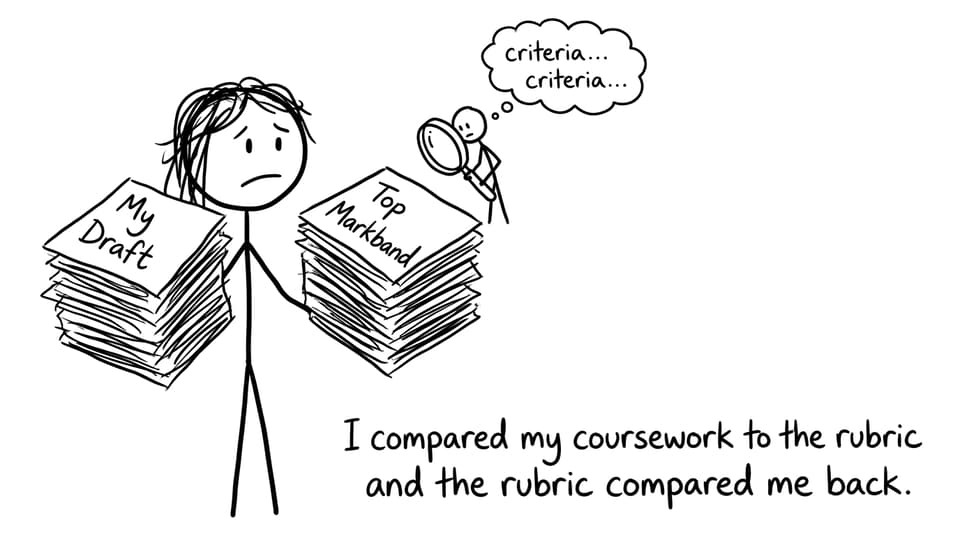
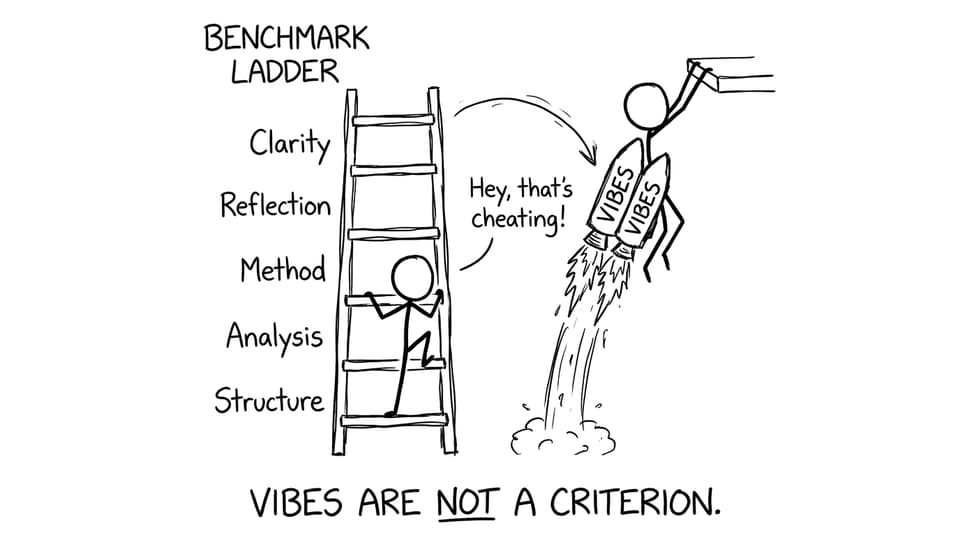
In IB, examiners aren’t grading your effort. They’re grading alignment: structure, analysis, methodology, reflection, clarity, and how consistently you hit the descriptors. So “How do I stack up?” is really two questions:
-
Which criteria am I already meeting?
-
Which criteria look covered, but don’t earn marks yet?
A smart comparison doesn’t tell you to rewrite everything. It tells you where the markband ceiling is coming from.
If you want to see what top work looks like across subjects, start with the IB Coursework Examples: IA, EE and TOK Exemplars library.
A quick IB coursework comparison checklist
Before you edit a single paragraph, run this quick benchmark check (10 minutes, max):
-
Introduction: does it set a focused, arguable direction (not just topic summary)?
-
Criteria language: can you point to lines that clearly match the rubric descriptors?
-
Analysis: are you explaining “so what?” after evidence, consistently?
-
Method/choices: do you justify decisions, not just describe them?
-
Reflection: do you show learning and limitations, not a diary recap?
-
Presentation: is it easy for an examiner to award marks quickly?
This is the heart of IB coursework comparison: making marks easy to give.
How RevisionDojo makes IB coursework benchmarking practical
Most students try to benchmark by asking friends, scrolling random samples, or relying on vague feedback like “add more evaluation.” That usually creates more work, not more clarity.
RevisionDojo is built for the opposite: fast signal, low drama.
Criterion-based scoring you can actually use
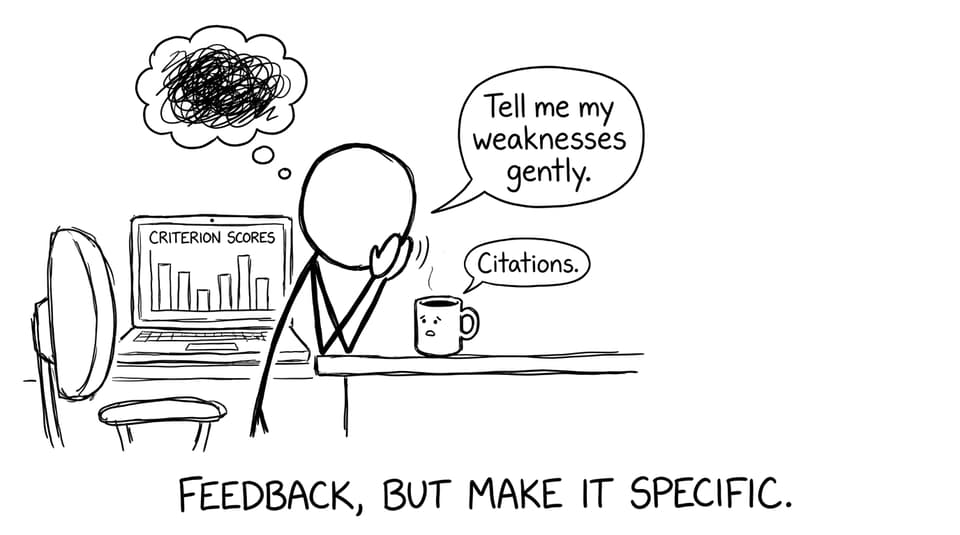
With the IB Coursework Grader, you upload your draft and get criterion-focused feedback that mirrors how IB descriptors are applied. Instead of one overall comment, you see where marks are gained or lost across the strands that matter.
When you’re stuck, pair that with Jojo AI study support to ask targeted questions like: “Which sentence is weakest for analysis?” or “What would an examiner need to see for the next band?”
Benchmarking against real top standards (without copying)
The point of exemplars is not imitation. It’s calibration.
In the Coursework Exemplars hub, you can compare how high-scoring students:
-
frame a research question or line of inquiry
-
keep analysis running through the body (not just in one “evaluation” paragraph)
-
reflect with specificity (limitations, improvements, what changed)
If you’re a TOK student, the IB Theory of Knowledge (TOK) Examples page is a clean place to see what “top-band clarity” feels like.
Turning coursework strength into exam momentum
Comparative analysis also helps your exam prep. When you learn what the IB rewards in coursework (precision, justification, clear reasoning), your exam writing improves too.
To convert that into a daily system, use RevisionDojo’s How to Study for IB Exams Without Burning Out guide, then reinforce weak skills with How 45-Point IB Students Prepare for Exams. Add timed realism later using IB: The Last 2 Weeks Before Exams (What Matters).
How to use comparative IB coursework analysis (a simple loop)
Use this loop once per draft cycle:
-
Upload your IA/EE/TOK draft to the Coursework Grader
-
Note the two lowest criteria (don’t chase everything)
-
Open 1-2 relevant pieces in the Coursework Exemplars library
-
Identify one visible difference (structure, depth, justification, reflection)
-
Rewrite only the sections linked to those criteria
-
Re-check until the markband movement is real
That’s how top IB students work: fewer edits, but sharper edits.
Conclusion: In IB, clarity beats guesswork
The fastest way to improve IB coursework isn’t writing more paragraphs. It’s learning what the top markbands look like, then revising with precision.
If you want to see how you stack up without spiraling, start with RevisionDojo’s Coursework Exemplars and run your draft through the IB Coursework Grader. Then use the platform’s Study Notes, Flashcards, Questionbank, AI Chat, Grading tools, Predicted Papers, Mock Exams, Coursework Library, and Tutors to turn that clarity into exam-ready confidence.