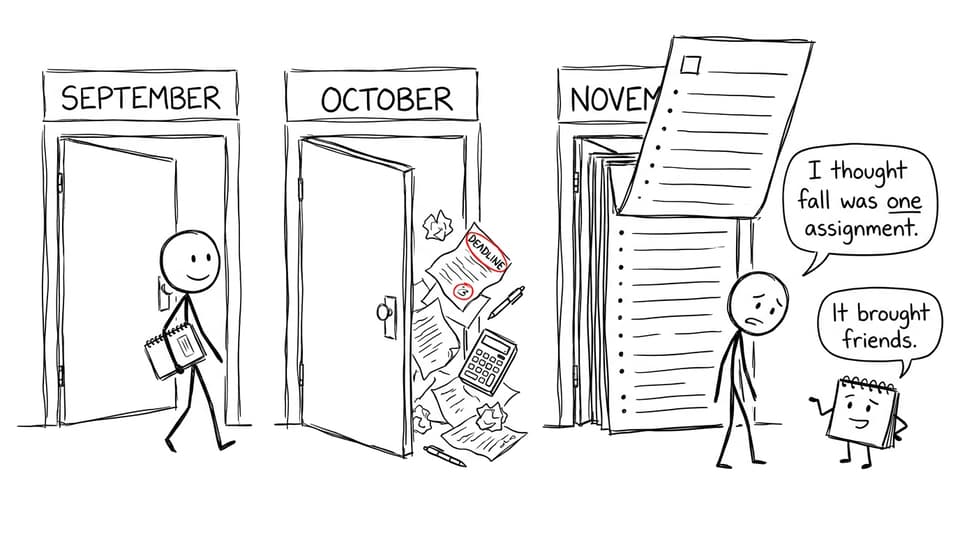

Fall burnout hits IB students because pressure rarely arrives as one dramatic event. It accumulates. New classes become difficult, early tests expose gaps, coursework milestones overlap, and routines that felt sustainable in September begin borrowing energy from October.
The IB Diploma Programme adds another layer. Students manage six subjects alongside internal assessments, the Extended Essay, Theory of Knowledge, CAS, applications, activities, and school-specific deadlines. The official programme is demanding, but each school's autumn calendar differs. Local planning matters.
The answer is not simply to work harder. It is to identify workload collisions early, protect recovery, and replace vague studying with small tasks that produce visible progress.
The fall burnout checklist
Before assuming you have become lazy or unmotivated, ask:
- Are coursework, tests, and application deadlines clustered together?
- Has work lost a clear stopping point at night?
- Are you rereading without testing what you remember?
- Do small assignments feel unusually difficult to begin?
- Have meals, exercise, friends, or genuine downtime disappeared?
- Are you exhausted, detached, or convinced effort no longer matters?
One difficult week is not automatically burnout. Persistent exhaustion, detachment, and a reduced sense of effectiveness are more concerning, particularly when rest no longer helps. RevisionDojo's guide to recovering from IB burnout explains how to respond when temporary pressure becomes a pattern.
Why fall burnout hits IB students unexpectedly
September can create false confidence. Deadlines look distant, motivation is high, and students plan around their best energy rather than their normal energy.
October changes the arithmetic. A task called “work on the IA” actually involves research, data collection, analysis, drafting, feedback, and revision. An Extended Essay milestone competes with a test, while CAS and university applications continue consuming time.
By November, unfinished work begins charging interest. Each delayed task reduces the time available for the next one. The emotional burden grows because the student must repeatedly decide what to neglect.