


Your IA rarely fails because you “didn’t work hard enough.” It fails because the work drifts.
One week you’re excited about the topic. The next week you’re buried under tabs, chasing a better graph, a cleaner method, a smarter quote. Meanwhile, the rubric sits quietly in the background like a lighthouse you forgot to look at.
This guide brings you back to that lighthouse. If you’re an IB student preparing for exams, your IA is one of the few places you can convert steady effort into reliable marks. And with the right system (and the right tools), the IA becomes less mysterious and more manageable.
What an IA is (and why it matters)
An IB Internal Assessment, usually called an IA, is a subject-based piece of coursework where you investigate a focused question through research, experimentation, exploration, or analysis. Your teacher marks it using IB criteria, and then IB examiners moderate samples to keep standards consistent.
The important part: the IA often contributes roughly 20-30% of your final subject grade (exact weighting depends on the subject). That makes the IA too valuable to treat as “just coursework” and too structured to treat as “creative writing.”
If you want a calmer, rubric-aware workflow, RevisionDojo is designed for exactly this moment in the Diploma Programme: a place where exam prep and IA improvement live in the same system.
IA formats by subject (quick overview)
Your IA format depends on the course, but the logic stays the same: focused question, clear evidence, and criterion-aligned communication.
Common IA formats you’ll see
-
Sciences (Biology, Chemistry, Physics): investigation/experiment with analysis and evaluation
-
Mathematics (AA/AI): mathematical exploration using modeling, patterns, or real-life applications
-
Humanities (History, Geography, Business): research-driven investigation/report using sources and analysis
-
Languages: spoken or written analytical tasks tied to course goals
-
Arts: portfolio/performance with reflection
When you’re unsure what “good” looks like, use models. RevisionDojo’s IB Coursework Examples: IA, EE and TOK Exemplars gives you a fast way to benchmark structure and depth without guessing.
The IA success checklist (print this mentally)
Before you write another paragraph of your IA, check these five points:
-
Question focus: Can you say your research question in one breath?
-
Feasibility: Can you realistically collect/analyze what you claim you will?
-
Criteria alignment: Do your headings map to what gets marked?
-
Evidence quality: Is your data/source base strong enough to support analysis?
-
Iteration plan: Do you have a feedback loop before final submission?
That last point is where most IA marks are won. Not by being “smart,” but by rewriting the right parts.
How to choose an IA topic that actually scores
A strong IA topic is not the most interesting topic. It’s the topic that creates high-quality evidence and lets you show analysis.
Start with personal interest, then narrow aggressively
Interest matters because it keeps you going. But examiners reward precision. So take your broad interest and squeeze it until it becomes testable.
Instead of: “Sports psychology”
Move toward: “How does crowd noise correlate with free-throw accuracy in my school team across three matches?”
Instead of: “Climate change”
Move toward: “How does pH vary across three points of a local stream, and what might explain the difference?”
The trick is to choose a scope that lets you finish.
Use exemplars for reality checks
When you’re unsure whether your IA is too broad, compare it to top work. A good next step is IB Coursework Comparison: See How You Stack Up, which helps you read exemplars like a strategist, not a tourist.
A step-by-step plan to write a high-scoring IA
This is a repeatable IA workflow you can use in almost any subject.
Write a research question you can defend
Aim for a question that is:
-
specific
-
measurable (even in essay-based subjects, you can define what “evidence” means)
-
doable with your time/tools
If your IA question needs three paragraphs to explain, it’s probably too wide.
Build a method that produces clean evidence
In sciences and math, this is your procedure and data collection. In humanities, it’s your selection of sources, case studies, and analytical lens.
A useful mindset: your IA is only as strong as the evidence you can clearly interpret.
Analyse like you’re teaching the reader
Analysis isn’t “adding more graphs.” It’s explaining what the evidence implies and why it matters.
If you’re revising for exams at the same time, keep your thinking sharp by doing targeted practice alongside coursework. RevisionDojo’s Questionbank helps you keep content knowledge warm while your IA drafts are in progress.
Evaluate with honesty (not drama)
The evaluation section is where many IAs become vague. Strong evaluation is specific:
-
limitations that actually affected results
-
improvements that are realistic
-
reflections that connect directly to your method and analysis
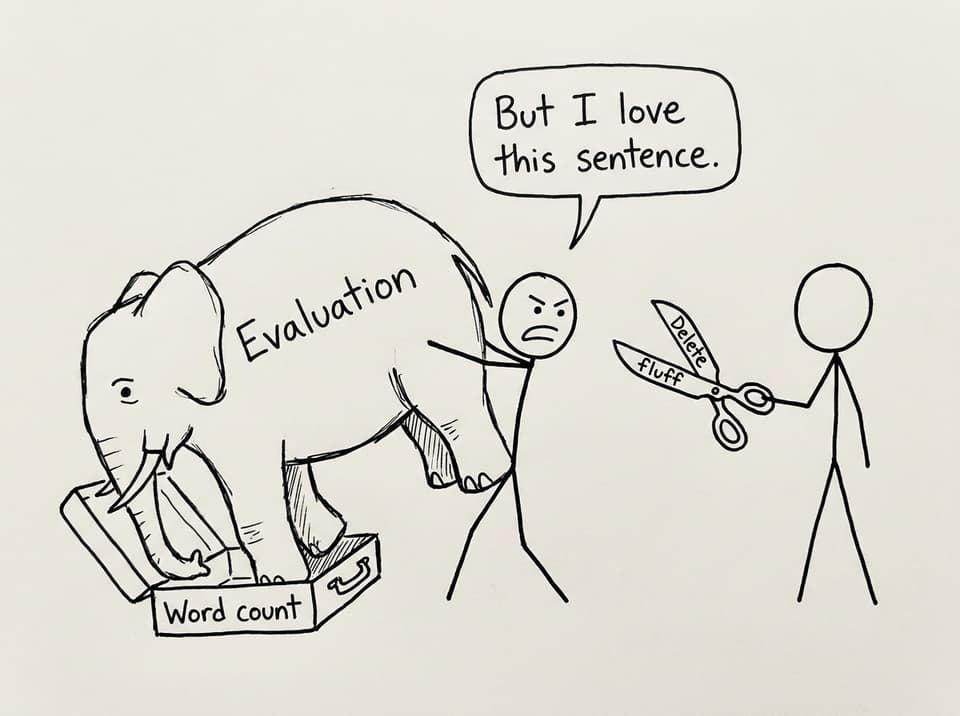
Also: stay within word count limits. The word limit is not a suggestion.
Run a feedback loop before your final draft
A great IA is usually a second or third draft that got smarter.
Use fast, criterion-based feedback so you’re not guessing what to fix. RevisionDojo’s IB Coursework Grader is built for IA drafts: you upload, get rubric-aligned feedback, then revise what moves marks.
If you want a deeper walkthrough, this guide helps you understand the value of rapid evaluation: IB IA Grading Service: Professional Assessment in Minutes.
Common IA mistakes (and how to avoid them)
Most IA problems are predictable.
-
Vague question: your analysis becomes a summary because the direction is unclear
-
Overcomplicated method: you lose time and end up with messy evidence
-
Thin analysis: you describe results instead of interpreting them
-
Weak referencing: you forget to cite, cite inconsistently, or cite irrelevant sources
-
Last-minute drafting: the IA needs iteration, not a single heroic weekend
When you feel stuck, ask a precise question and keep moving. RevisionDojo’s RevisionDojo App: The Smarter Way to Prep for IB Exams shows how students combine AI Chat, grading, and structured practice so coursework stress doesn’t spill into exam season.
How to balance IA work with exam prep
An IA can quietly consume your whole week if you let it. The best approach is to separate “coursework windows” from “exam training.”
A simple weekly rhythm:
-
2 focused IA sessions (planning, drafting, revising)
-
4 short exam sessions using Study Notes, Flashcards, and Questionbank practice
-
1 timed stamina session
For timed practice, RevisionDojo’s IB Predicted Papers by IB Examiners (Free) helps you rehearse pressure while your IA develops in the background.
FAQ
How long should an IA be?
Most IA tasks sit in a tight word-count range, often around 2,200 to 3,000 words depending on the subject, with some subjects using different limits and formats. What matters is not hitting the maximum, but using your words where marks are available. If your IA is long because you’re repeating descriptions, it will feel “busy” rather than analytical. If your IA is short because you skipped evaluation or interpretation, it will feel incomplete. A reliable strategy is to draft freely once, then cut until every paragraph clearly earns marks against the criteria.
Can I get help from a tutor or AI for my IA?
Yes, you can get support, but the final IA must remain your own work and your own decisions. The healthiest kind of help is feedback on clarity, structure, method quality, and whether your writing matches the rubric language. That’s why tools that respond to criteria are useful: they point to what to improve without writing the IA for you. If you want a structured feedback cycle, use the IB Coursework Grader to spot weaknesses, then revise in your own voice. If you need human support, RevisionDojo also offers Tutors, which can be especially helpful for topic feasibility and evaluation quality.
Are group investigations allowed for an IA?
In some subjects (especially sciences), students may share parts of data collection or a general investigation context, but each IA must be written independently. The safest assumption is this: even if the experiment setup overlaps, your research question, processing, analysis, and evaluation must clearly be your own. Teachers and moderators look for originality in thinking, not just originality in apparatus. If you worked with others, document what was shared and what you personally did differently. And always ensure your final IA reads like a coherent single-author investigation rather than a stitched-together group report.
Final thoughts: treat your IA like a score you can train
A strong IA is not a masterpiece. It’s a controlled project that follows the rubric, shows real thinking, and improves through feedback.
If you want that process to feel simpler, build it inside RevisionDojo: use the Coursework Library for models, the IA-focused Grading tools for fast improvements, AI Chat when you’re stuck, and keep exam momentum going with Flashcards, Study Notes, the Questionbank, Mock Exams, and Predicted Papers.
Your IA doesn’t need more stress. It needs a better loop. Start your next IA draft with a clear question, then run it through a rubric-aligned feedback cycle and watch the marks move.