Loading subject…
A - Unity and Diversity
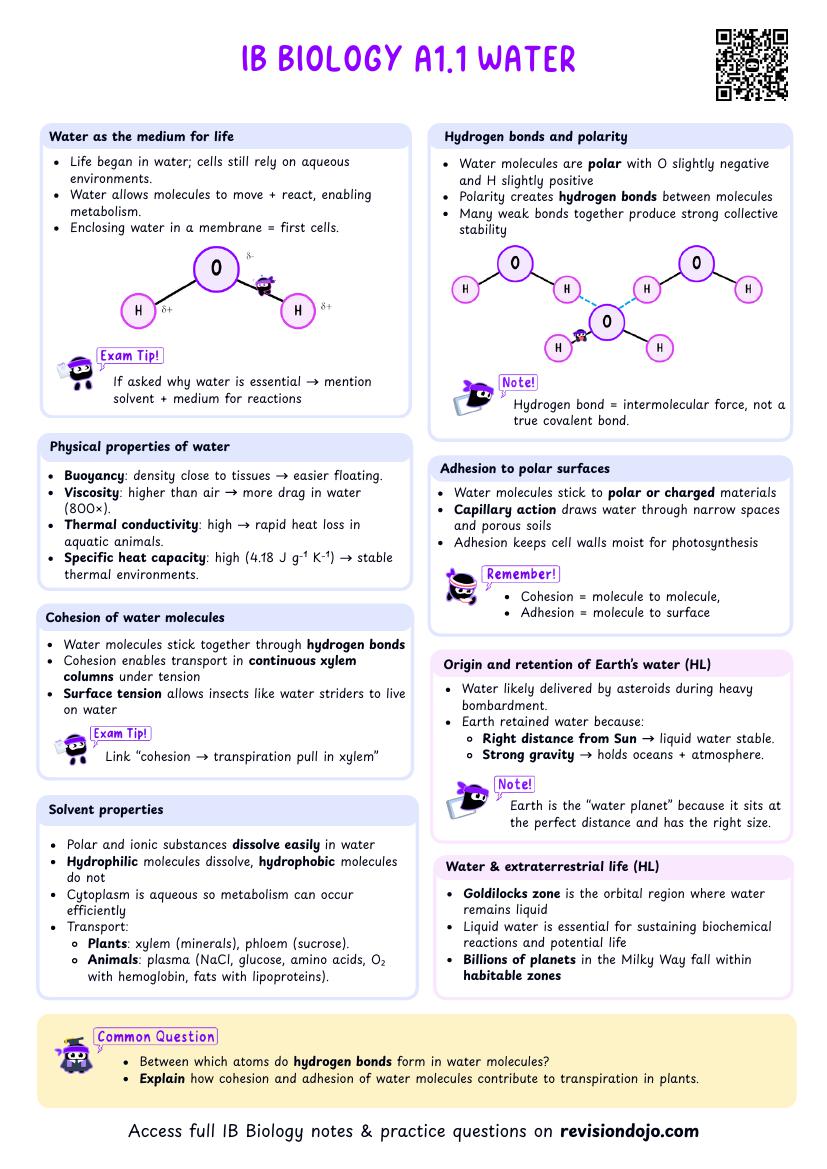
A1.1 Water
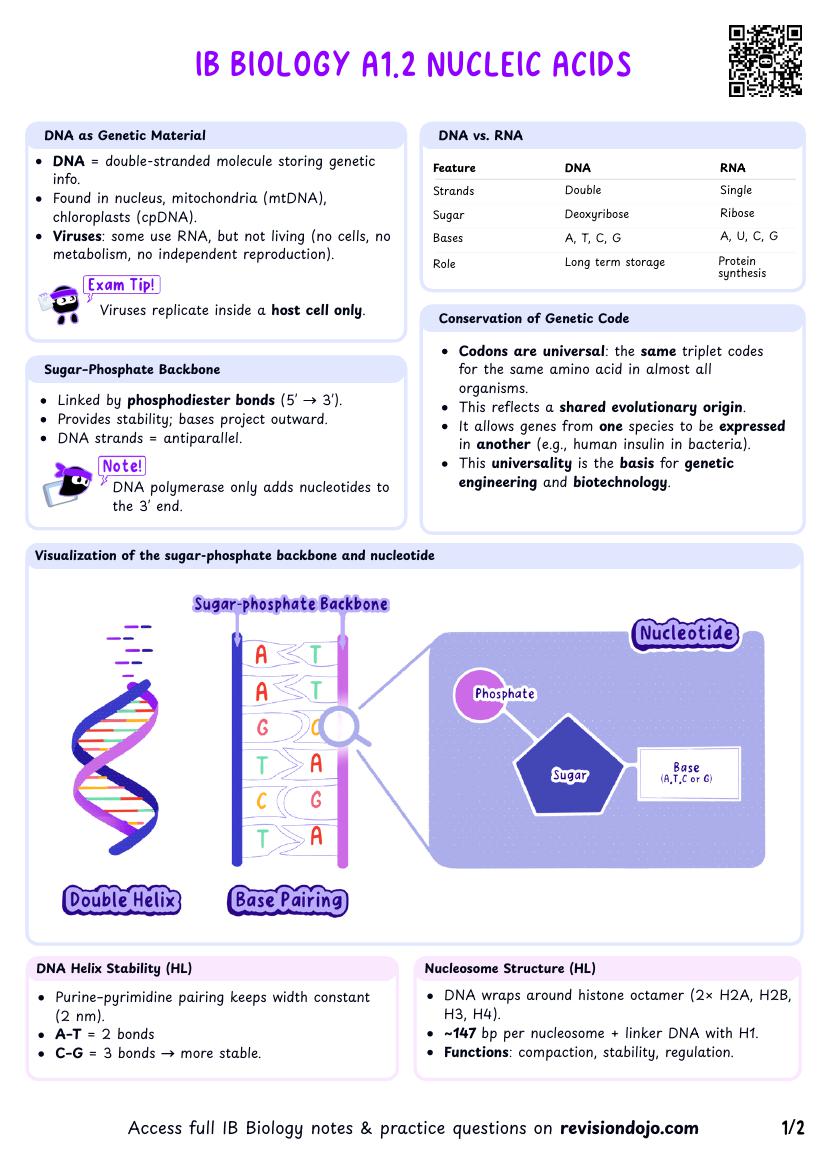
A1.2 Nucleic acids
A2.1 Origins of cells (HL)
A2.2 Cell structure
A2.3 Viruses (HL)
A3.1 Diversity of organisms
A3.2 Classification and cladistics (HL)
A4.1 Evolution and speciation
A4.2 Conservation of biodiversity
B - Form and Function
B1.1 Carbohydrates and lipids
B1.2 Proteins
B2.1 Membranes and membrane transport
B2.2 Organelles and compartmentalization
B2.3 Cell specialization
B3.1 Gas exchange
B3.2 Transport
B3.3 Muscle and motility (HL)
B4.1 Adaptation to environment
B4.2 Ecological niches
C - Interaction and Interdependence
C1.1 Enzymes and metabolism
C1.2 Cell respiration
C1.3 Photosynthesis
C2.1 Chemical signalling (HL)
C2.2 Neural signalling
C3.1 Integration of body systems
C3.2 Defense against disease
C4.1 Populations and communities
C4.2 Transfer of energy and matter
D - Continuity and Change
D1.1 DNA replication
D1.2 Protein synthesis
D1.3 Mutations and gene editing
D2.1 Cell and nuclear division
D2.2 Gene expression (HL)
D2.3 Water potential
D3.1 Reproduction
D3.2 Inheritance
D3.3 Homeostasis
D4.1 Natural selection
D4.2 Sustainability and change
D4.3 Climate change
Browse summary cheatsheets for
C4.2.1 Ecosystems
5 minute read
C4.2.2 Sunlight
4 minute read
C4.2.3 Flow of chemical energy through food chains
C4.2.4 Construction of food chains and food webs
6 minute read
C4.2.5 Supply of energy to decomposers
C4.2.6 Autotrophs
3 minute read
C4.2.7 Use of light as the external energy source
C4.2.8 Heterotrophs
C4.2.9 Release of energy in both autotrophs and heterotrophs
C4.2.10 Classification of organisms into trophic levels
C4.2.11 Construction of energy pyramids
C4.2.12 Reductions in energy availability at each successive stage in food chains
C4.2.13 Heat loss to the environment in both autotrophs and heterotrophs
C4.2.14 Restrictions on the number of trophic levels in ecosystems
2 minute read
C4.2.15 Primary production as accumulation of carbon compounds in biomass by autotrophs
C4.2.16 Secondary production as accumulation of carbon compounds in biomass by heterotrophs
C4.2.17 Constructing carbon cycle diagrams
C4.2.18 Ecosystems as carbon sinks and carbon sources
C4.2.19 Release of carbon dioxide into the atmosphere during combustion
C4.2.20 Analysis of the Keeling Curve in terms of photosynthesis, respiration and combustion
C4.2.21 Dependence of aerobic respiration on atmospheric oxygen produced by photosynthesis
C4.2.22 Recycling of all chemical elements required by living organisms in ecosystems
C4.2 Transfer of Energy and Matter